Renewed Strikes Between US, Iran Cause Spike In Oil Prices
Renewed Strikes Between US And Iran Cause (Another) Spike In Oil Prices
President Donald Trump’s war in Iran is now several months behind the two-to-four week timeline he initially gave at the start of the war. A ceasefire was declared in April, but it’s looking increasingly fragile as both the U.S. and Iran are accusing the other of violating the ceasefire after they exchanged airstrikes on Wednesday. As a result, oil prices are increasing yet again.
BBC News reports that while oil prices dipped earlier this week on hopes that Iran and the U.S. would reach a permanent ceasefire agreement that would reopen the Strait of Hormuz, they have spiked yet again due to strikes. Brent crude, the global oil benchmark, rose by 3.75% to $97.83 a barrel, while West Texas Intermediate crude, the U.S. benchmark, was 4% higher at $92.22.
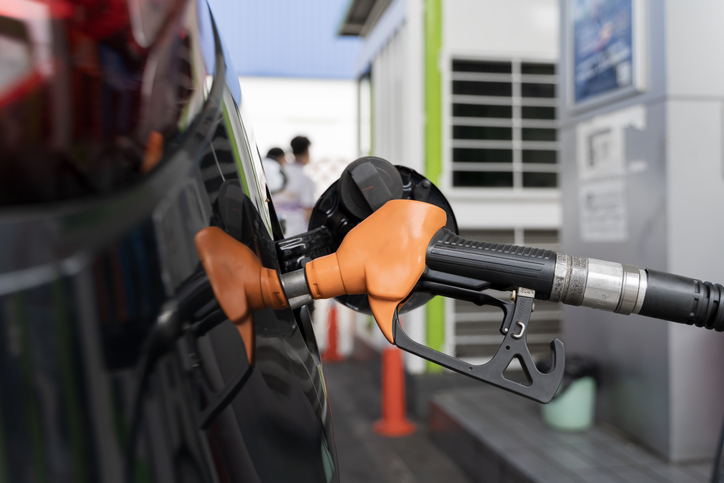
Considering that gas prices are already over $4 in all 50 states, this is far from a positive development. As a result of the ongoing war in Iran, the Strait of Hormuz has effectively been closed. A quarter of the global oil supply passes through the Strait, which is why gas prices have increased so significantly. Increased oil prices don’t just affect our wallets at the gas pump; they also impact the prices of food and essential goods, as those are transported by diesel-fueled semitrucks. The longer the war goes on, the greater the odds that it will trigger a global recession.
A fact that doesn’t seem to concern Trump at all, considering he’s outright said he doesn’t think about how the war is impacting the finances of everyday Americans.
The strikes are a major about-face because Iran and the U.S. seemed close to a deal as recently as Sunday. Apparently, those talks aren’t going well as the U.S. launched an airstrike in Southern Iran on Wednesday. Iran retaliated on Thursday by launching missiles at a U.S. base in Kuwait. Despite launching the initial strikes, the U.S. has accused Iran of being the one to violate the ceasefire.
Trump has repeatedly said he doesn’t want the Strait of Hormuz to remain under Iranian control. The problem is that Trump has very little leverage on this point, considering Iran already controls the Strait and thus controls the flow of oil. Did homie not read Dune? “He who controls the spice controls the universe” is basically geopolitics 101.
Despite Trump’s demands, experts have said that most leaders in the Middle East have conceded that Iran now controls the Strait of Hormuz.
“No matter what happens, the Iranians will control the Strait of Hormuz for the foreseeable future; it doesn’t even matter what the deal says. Everybody in the region believes that,” Amos Hochstein, who served as a senior energy adviser to former President Joe Biden, told CNBC’s “Squawk Box.”
Only making matters worse is the fact that Trump has threatened to attack Oman, a U.S. ally, if they enter into an agreement with Iran to help manage the Strait of Hormuz. “Oman will behave just like everybody else, or we’ll have to blow them up,” Trump said during a Cabinet meeting on Thursday. “They understand that. They’ll be fine.”
Just gonna leave this Tony Stark sigh right here, because bruh.
I totally love that Trump may have permanently impacted oil prices for the worse by closing a port that was already free and open, and is alienating our allies, all in the pursuit of a nuclear weapon that doesn’t exist.
Between a war in the Middle East over nonexistent weapons of mass destruction and a domestic economy that’s looking uncomfortably reminiscent of the Great Recession, I’m really tired of all this Y2K nostalgia.
SEE ALSO:
Everything We Know About The Conflict In Iran
Iran War Already Increasing Gas Prices, Mortgage Rates
Renewed Strikes Between US And Iran Cause (Another) Spike In Oil Prices was originally published on newsone.com


